
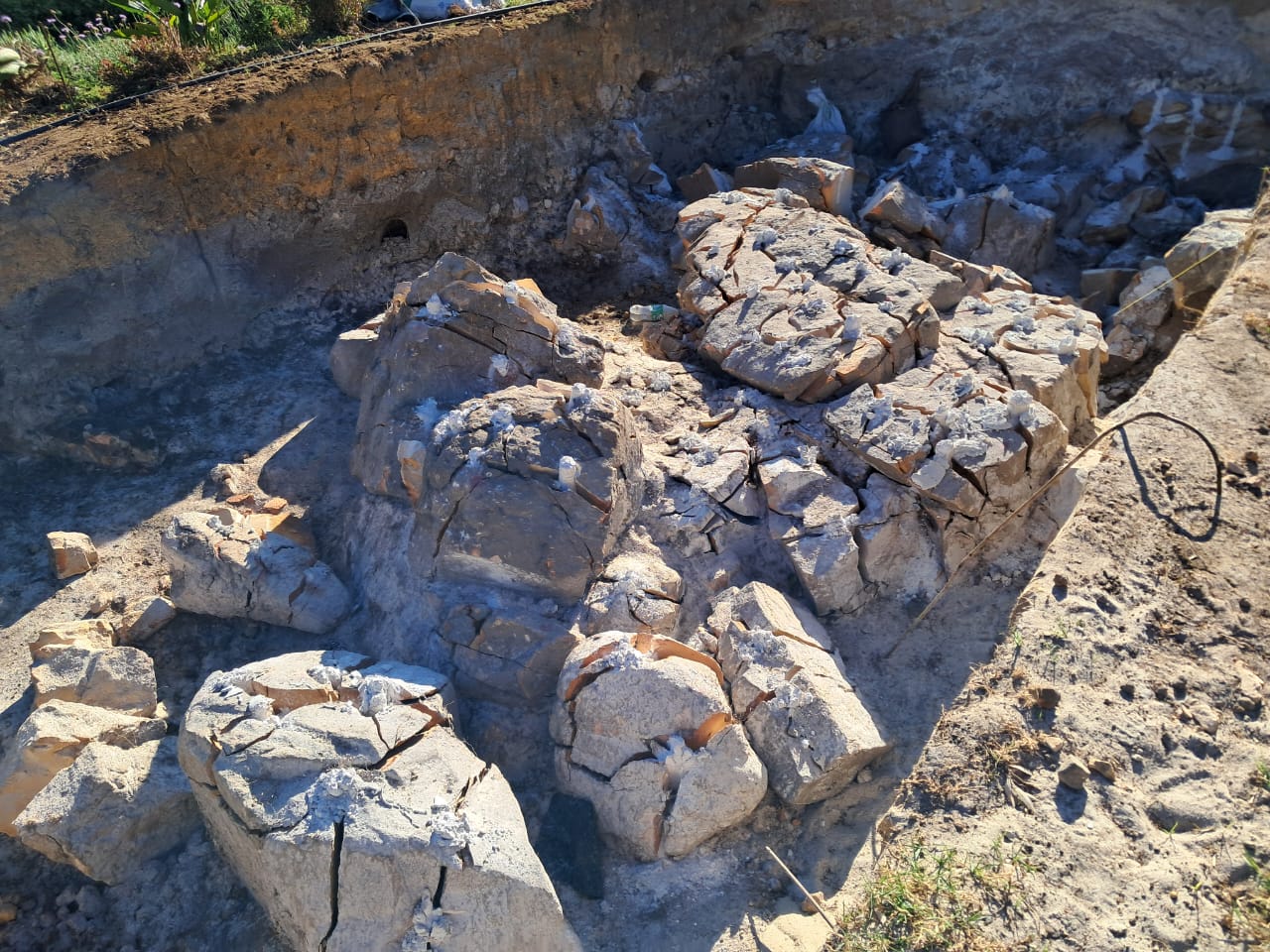
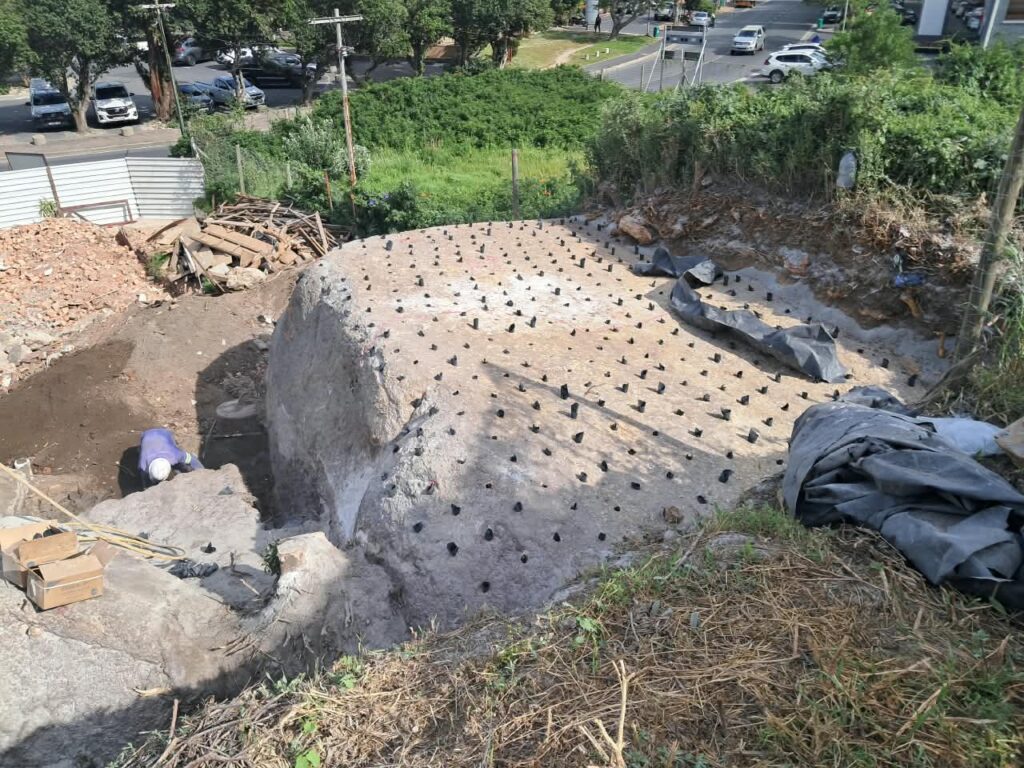
When it comes to construction and civil engineering projects in South Africa, encountering hard rock is often one of the biggest challenges contractors face. Whether you’re excavating foundations for a new building, preparing a site for development or installing underground services, solid rock can quickly bring progress to a halt.
Traditionally, drilling and blasting have been among the most effective methods of breaking hard rock. However, conventional blasting is not always practical, particularly in residential areas, near existing buildings or on sites where noise, vibration and safety restrictions need to be considered.
Fortunately, there is an alternative.
Chemical rock breaking is a non-explosive method of breaking rock and concrete using specially formulated expansive compounds. It provides a controlled approach to rock excavation, making it particularly useful in environments where traditional blasting may be unsuitable.
At ROCK-TECH, we understand the challenges involved in working with difficult ground conditions. With experience in controlled drilling, blasting and specialised rock excavation dating back to 1981, we appreciate the importance of choosing the right method for every project.
What Is Chemical Rock Breaking?
Chemical rock breaking, also known as non-explosive rock breaking or chemical rock splitting, is a method of fracturing rock and concrete without using conventional explosives.
Instead of relying on a sudden explosive force, the process uses a specially formulated expansive demolition agent that generates pressure as it reacts.
The process begins by drilling a series of strategically positioned holes into the rock. An expansive compound, generally supplied in powder form and mixed with water, is then introduced into the drilled holes.
As the chemical reaction develops, the compound gradually expands, placing pressure on the surrounding rock.
Eventually, this pressure exceeds the rock’s tensile strength, causing cracks to form and spread through the material.
The rock can then be separated and removed using suitable excavation equipment.
Unlike conventional blasting, the process does not involve a detonation, making it particularly valuable for projects where controlling vibration and disturbance is a priority.
How Does Chemical Rock Breaking Work?
Although the technology behind chemical rock breaking is quite sophisticated, the actual process follows a series of carefully planned stages.
Step 1: Site Assessment and Planning
Every successful rock-breaking operation starts with understanding the site.
Before any work begins, the rock formation, surrounding environment and excavation requirements must be assessed.
Important considerations include:
- The type and hardness of the rock.
- The depth and extent of the required excavation.
- Existing cracks and natural weaknesses in the rock.
- Nearby buildings, foundations and underground services.
- Available access for drilling and excavation equipment.
- Environmental and operational restrictions.
A proper assessment helps determine whether chemical rock breaking is appropriate and how the work should be planned.
Step 2: Drilling the Rock
Once the site has been assessed, holes are drilled into the rock according to a carefully designed pattern.
The diameter, depth and spacing of the holes influence how the rock fractures.
Accurate drilling is important because the aim is to create controlled fracture lines that allow the rock to be broken into manageable sections.
The drilling pattern depends on the rock characteristics, the expansive product being used and the size of the material that needs to be removed.
Step 3: Preparing and Applying the Expansive Compound
After drilling, a suitable non-explosive demolition agent is prepared in accordance with the manufacturer’s specifications.
These compounds are generally supplied as dry powders that react when mixed with water.
The prepared material is placed into the drilled holes by trained personnel using the appropriate equipment and protective measures.
Correct product selection and handling are essential, particularly because temperature and other environmental conditions can influence the reaction.
Step 4: Controlled Expansion and Rock Fracturing
Once the compound has been placed into the holes, the chemical reaction begins.
As the material expands, it generates pressure against the surrounding rock.
Over time, this pressure creates cracks that spread through the rock formation.
The expansion occurs progressively rather than through the sudden release of energy associated with explosives.
The time required for the rock to fracture varies according to the product, rock conditions, drilling pattern and temperature.
In some applications, cracks may develop within several hours, while others can take considerably longer.
Step 5: Removing the Broken Rock
Once the rock has fractured sufficiently, the separated sections can be removed.
Depending on the size of the fragments and accessibility of the site, this may involve excavators, loaders or other mechanical equipment.
In some cases, additional breaking may be necessary before the material can be removed.
The area can then be prepared for the next stage of construction.
The Advantages of Chemical Rock Breaking
Chemical rock breaking offers several important benefits, particularly for projects where conventional blasting presents practical or environmental challenges.
1. No Conventional Explosives Required
One of the main advantages of chemical rock breaking is that it does not require a conventional explosive detonation.
Traditional blasting relies on the rapid release of energy to fragment rock. Although highly effective, this creates shockwaves, noise and ground vibration that must be carefully controlled.
Chemical rock breaking uses gradual expansion instead.
This makes it an attractive option for projects where the use of explosives may be restricted or undesirable.
However, non-explosive does not mean completely risk-free. Expansive agents still require correct handling and appropriate safety procedures.
2. Significantly Reduced Ground Vibration
Ground vibration is a major consideration when excavating near existing structures.
Buildings, retaining walls, underground pipelines and other infrastructure may be sensitive to excessive vibration.
Because chemical rock breaking generates pressure gradually, the fracturing process produces very little of the ground vibration associated with explosive blasting.
This makes it particularly useful for excavation work near residential developments, commercial properties and sensitive structures.
3. Less Noise and Disturbance
Construction work is noisy enough without the additional disturbance of explosive blasting.
Although drilling and mechanical rock removal still generate noise, the chemical expansion process itself is comparatively quiet.
This can be especially beneficial in residential neighbourhoods, commercial developments and other areas where noise needs to be carefully managed.
For contractors working close to occupied buildings, reducing unnecessary disturbance can make a significant difference to the overall project.
4. Greater Control Over Rock Fracturing
Not every excavation requires large quantities of rock to be removed.
Sometimes the objective is to remove a specific section while leaving the surrounding material relatively undisturbed.
Chemical rock breaking allows contractors to plan drilling patterns around the required excavation area.
This provides greater control over where cracks are intended to develop, although actual fracture paths will also depend on natural weaknesses and other characteristics of the rock.
It is particularly useful for foundation excavations, trenching and work in restricted spaces.
5. Reduced Risk of Flyrock
Flyrock is one of the hazards that must be managed during conventional blasting.
It occurs when fragments of rock are propelled through the air by explosive forces.
Chemical rock breaking does not create the same explosive fragmentation mechanism.
This removes the risk of conventional blast-generated flyrock, although incorrect application of expansive compounds can still result in dangerous material blowouts or unstable rock.
Appropriate exclusion zones and safety precautions therefore remain essential.
6. Suitable for Confined and Sensitive Areas
Many construction sites simply do not have the space or conditions required for conventional blasting.
This is especially true in built-up environments, where neighbouring properties, roads, services and existing structures can limit the available options.
Chemical rock breaking can offer a practical alternative in these circumstances.
Typical applications include basement excavations, foundation work, restricted construction sites and projects close to sensitive infrastructure.
7. Reduced Environmental Disturbance
Chemical rock breaking can help reduce certain environmental impacts associated with conventional blasting.
The absence of an explosive detonation means there are no conventional blasting shockwaves or explosive fumes.
Rock also tends to fracture without being thrown over large distances, making the process easier to contain within the immediate work area.
However, it is important to recognise that chemical rock breaking is not entirely free of environmental impacts.
Drilling dust, equipment emissions, chemical handling and the disposal of broken material still need to be managed responsibly.
Where Is Chemical Rock Breaking Used in South Africa?
Chemical rock breaking has applications across several industries, particularly construction, civil engineering and specialised demolition.
Residential and Commercial Construction
Excavating foundations for houses, office buildings and other developments can become challenging when hard rock is encountered.
Where nearby buildings make conventional blasting difficult, chemical rock breaking may offer a practical alternative.
Road Construction and Infrastructure Development
Road construction often requires the excavation of rock to achieve the necessary road levels, cuttings and foundations.
Chemical rock breaking can be considered for sections where blasting restrictions, limited access or nearby infrastructure make alternative methods desirable.
Trenching and Underground Services
Installing underground services frequently involves cutting trenches through difficult ground conditions.
Applications may include:
- Water supply pipelines.
- Sewerage and drainage systems.
- Electrical cable routes.
- Telecommunications infrastructure.
- Underground utility installations.
Chemical rock breaking can assist with controlled rock removal where the excavation needs to remain within a defined area.
Concrete Demolition
Expansive demolition agents are not limited to natural rock.
They can also be used to fracture large concrete elements, including certain reinforced concrete structures.
Additional mechanical work may be required to cut reinforcement and remove the broken sections.
Excavation Near Existing Buildings
Construction work close to existing buildings requires careful consideration of potential damage and disturbance.
Chemical rock breaking can be suitable where ground vibration from conventional blasting needs to be avoided or substantially reduced.
Quarrying and Mining Applications
Chemical rock breaking can also be used for selected rock splitting and fragmentation tasks in quarrying and mining environments.
However, for large-scale production where conventional blasting is permitted, explosives may remain the more efficient and economical option.
Chemical Rock Breaking vs Traditional Blasting
Both chemical rock breaking and conventional blasting have their place in the construction industry.
The most appropriate method depends on the type of rock, volume of excavation, location, budget and surrounding conditions.
Traditional Blasting
Conventional blasting is generally well suited to projects where large volumes of rock need to be fragmented efficiently.
It can provide high productivity and may offer a lower cost per cubic metre when site conditions allow blasting to be carried out safely.
However, blasting generates noise, ground vibration and potential flyrock hazards that must be carefully controlled.
Chemical Rock Breaking
Chemical rock breaking is typically more suited to projects where reduced vibration and controlled fracturing are priorities.
It avoids a conventional explosive detonation and may be used in areas where blasting would be difficult or impractical.
However, the process can be slower because time is needed for drilling, chemical expansion and subsequent rock removal.
It may also involve higher costs depending on the material, drilling requirements and amount of rock being excavated.
The key is not necessarily choosing the fastest method, but selecting the most appropriate solution for the conditions on site.
Is Chemical Rock Breaking Safe?
Chemical rock breaking can be a useful alternative where the risks and disturbances associated with conventional blasting need to be reduced.
However, like any specialised excavation method, it must be properly planned and carried out by trained personnel.
Expansive demolition compounds can generate significant heat and pressure during their reaction.
Incorrect preparation or application can create dangerous conditions, including material being expelled from drilled holes.
Other hazards include drilling dust, unstable fractured rock, heavy equipment and manual handling.
Professional supervision, appropriate personal protective equipment, product-specific safety procedures and proper site management are essential.
Chemical rock breaking should never be treated as a completely harmless process simply because it does not use explosives.
Is Chemical Rock Breaking More Cost-Effective?
One of the most common questions contractors ask is whether chemical rock breaking costs less than conventional blasting.
The answer depends on the project.
For large open excavations where blasting is permitted, traditional methods can be more economical due to their speed and ability to fragment substantial volumes of rock.
Chemical rock breaking, on the other hand, may require additional drilling, specialised materials and more time to complete the fracturing process.
However, the overall cost of a project involves more than the price of breaking the rock.
Where conventional blasting creates significant restrictions or requires additional protective measures, chemical rock breaking may offer practical benefits that justify its use.
Factors such as accessibility, neighbouring structures, environmental requirements and project scheduling should all form part of the decision.
A proper site assessment is the best way to determine the most suitable approach.
Why Choose ROCK-TECH for Your Rock Breaking Requirements?
When you’re dealing with difficult ground conditions, experience and practical knowledge matter.
Established in 1981, ROCK-TECH is a proudly South African, family-owned business specialising in controlled drilling, blasting, rock breaking and specialised excavation services.
With more than four decades of industry experience, we understand that no two construction sites are exactly alike.
Every project presents its own challenges, from difficult rock formations and restricted access to surrounding buildings and infrastructure.
Our approach is built around understanding those challenges and identifying an appropriate solution for the work required.
Whether your project involves foundation excavation, road construction, trenching, site preparation or specialised rock removal, selecting the correct breaking method is essential to keeping the project moving.
Chemical rock breaking provides another option for projects where conventional blasting may not be suitable.
Frequently Asked Questions About Chemical Rock Breaking
How long does chemical rock breaking take?
The time required depends on the expansive agent, rock type, temperature and drilling pattern.
In some applications, fracturing may begin within several hours. Other projects may require a day or longer for the material to develop the necessary pressure.
Additional time must also be allowed for drilling and removing the broken rock.
Can chemical rock breaking be used near residential buildings?
Yes. Chemical rock breaking is often considered for projects close to residential properties because it generates very little vibration during the fracturing process.
However, nearby structures and underground services must still be assessed, and proper safety procedures must be followed.
Does chemical rock breaking work on hard rock?
Yes. Chemical rock breaking can be effective on many types of hard rock, provided the correct product and drilling design are selected.
The results depend on the rock’s characteristics, existing fractures and site conditions.
Can chemical rock breaking be used on concrete?
Yes. Expansive demolition agents can be used to break certain concrete structures.
Where reinforced concrete is involved, additional work may be required to separate steel reinforcement after the concrete has fractured.
Is chemical rock breaking environmentally friendly?
Chemical rock breaking can reduce some impacts associated with explosive blasting, particularly noise, vibration and flyrock.
However, it is not completely impact-free. Dust control, equipment operation, chemical handling and material disposal still require responsible management.
Is chemical rock breaking better than blasting?
Neither method is automatically better in every situation.
Conventional blasting is often more efficient for large-scale rock excavation, while chemical rock breaking can be advantageous in restricted or sensitive environments.
The best method depends on the technical and practical requirements of the project.
Choosing the Right Rock Breaking Solution
Anyone involved in construction knows how quickly unexpected ground conditions can affect a project’s progress.
Hard rock excavation requires more than simply choosing a machine and starting work. It requires an understanding of the material, the surrounding environment and the most practical way to achieve the required result.
Chemical rock breaking offers an effective non-explosive alternative for projects where controlling vibration, reducing disturbance and achieving more localised rock fracturing are important considerations.
From residential developments and commercial construction to roadworks and specialised civil engineering projects, it provides contractors with another option for tackling challenging ground conditions.
At ROCK-TECH, our focus is on practical rock-breaking solutions supported by decades of experience in the industry.
Whether a project calls for conventional controlled blasting, chemical rock breaking or another specialised excavation technique, the objective remains the same: achieving effective rock removal while managing safety, efficiency and the surrounding environment.
Need Professional Rock Breaking Services?
If you’re planning a construction or civil engineering project and are concerned about difficult rock conditions, get in touch with ROCK-TECH.
Our team can discuss your requirements and help identify an appropriate rock-breaking approach for your site.
ROCK-TECH | Controlled Drilling, Blasting & Rock Breaking Specialists Since 1981
Telephone: 060 480 7296
Email: Charle@rock-tech.co.za
Website: https://rock-tech.co.za/
Address: The Paddock Centre, Milnerton, Cape Town, 7441
References and Further Reading
The technical information presented in this article is supported by the following industry research, manufacturer documentation and South African technical resources.
1. Maubane, I. & Ngwenyama, P.L. (2025). The Use of Soundless Chemical Demolition Agents in Large-Scale In Situ Rock Breaking Applications in the Mining Industry. Journal of the Southern African Institute of Mining and Metallurgy, Volume 125, Issue 7, pp. 371–384. University of Pretoria. https://doi.org/10.17159/2411-9717/3204/2025
2. Harlen Supplies, South Africa. NexPand: Non-Explosive Rock Breaking Chemical. Product information covering expansive demolition agents, applications in mining and construction, controlled fracturing and operating conditions. https://www.harlensupplies.co.za/nexpand-products/nexpand
3. DYNACEM. Non-Explosive Demolition Agent: Technical Information and Frequently Asked Questions. Manufacturer guidance on reaction times, temperature considerations and chemical rock-breaking applications. https://dynacem.com/public/uk-en/faq
4. DYNACEM. Non-Explosive Demolition Agent: Technical Data and Safety Information. Manufacturer documentation concerning product handling, application requirements and potential hazards. https://files.dynacem.com/si-en/download/non-explosive-demolition-agent-dynacem-data-sheet-sm.pdf
5. ROCK-TECH. Controlled Drilling, Blasting and Rock Breaking Services. Company information and civil engineering services. https://rock-tech.co.za/
← All articles